

Scroll-Stopping: The Art of Vertical Fashion Video for Reels, TikTok, and Stories
Short-form vertical video has eaten fashion marketing — and the rules of composition, pacing, and motion are completely different from anything that came before. Here is how to actually win the feed.

Made with Fittins AI · View this video
Look at where fashion lives in 2026. It is not on a magazine page. It is not on a desktop website. It is in a vertical rectangle, played silently, swiped past in under two seconds unless something stops you. That rectangle is now where collections debut, where new brands are discovered, and where many fashion purchases begin.
And here is the uncomfortable truth most brands have not caught up to: vertical fashion video is a completely different medium from horizontal video, and almost everything you learned from cinema, lookbooks, and traditional commercials actively works against you here.
The Format War Is Over
Vertical 9:16 video is where much of fashion discovery and engagement happens on social platforms in 2026. If your content does not look native to that frame, the algorithm is less likely to surface it — no matter how beautiful it is in widescreen.
Why Vertical Is Not Just "Cropped Horizontal"
The most common mistake in fashion video right now is shooting (or generating) for 16:9 and then awkwardly cropping a vertical version. The composition collapses. The model's feet disappear. The garment gets cut in half. The energy that worked in widescreen falls flat in a phone.
Vertical video is a new grammar. The frame is taller than your eyeline. It compresses width and rewards height. It puts the viewer inches from the subject. And critically — it is consumed muted, in motion, between distractions. Every rule about pacing, focus, and storytelling has to be rewritten for those constraints.
The Three-Second Rule
You do not have ten seconds. You do not have five. You have three seconds to stop the thumb. If your video has not earned attention by frame number ninety, the viewer has already swiped to the next thing.
This means the slow editorial reveal — the kind that builds beautifully across thirty seconds of cinema — is functionally useless on social. You need the hook in the first frame. You need the garment, the muse, the motion, all of it, visible before the viewer's thumb completes its swipe instinct.
Open On Motion
Static opening frames lose the scroll. Open on a turn, a walk, a fabric movement, a hair toss — anything that registers as "something is happening here". The brain processes motion faster than it processes beauty. Motion buys you the second second.
Composition Rules That Actually Work in 9:16
The Vertical Composition Playbook
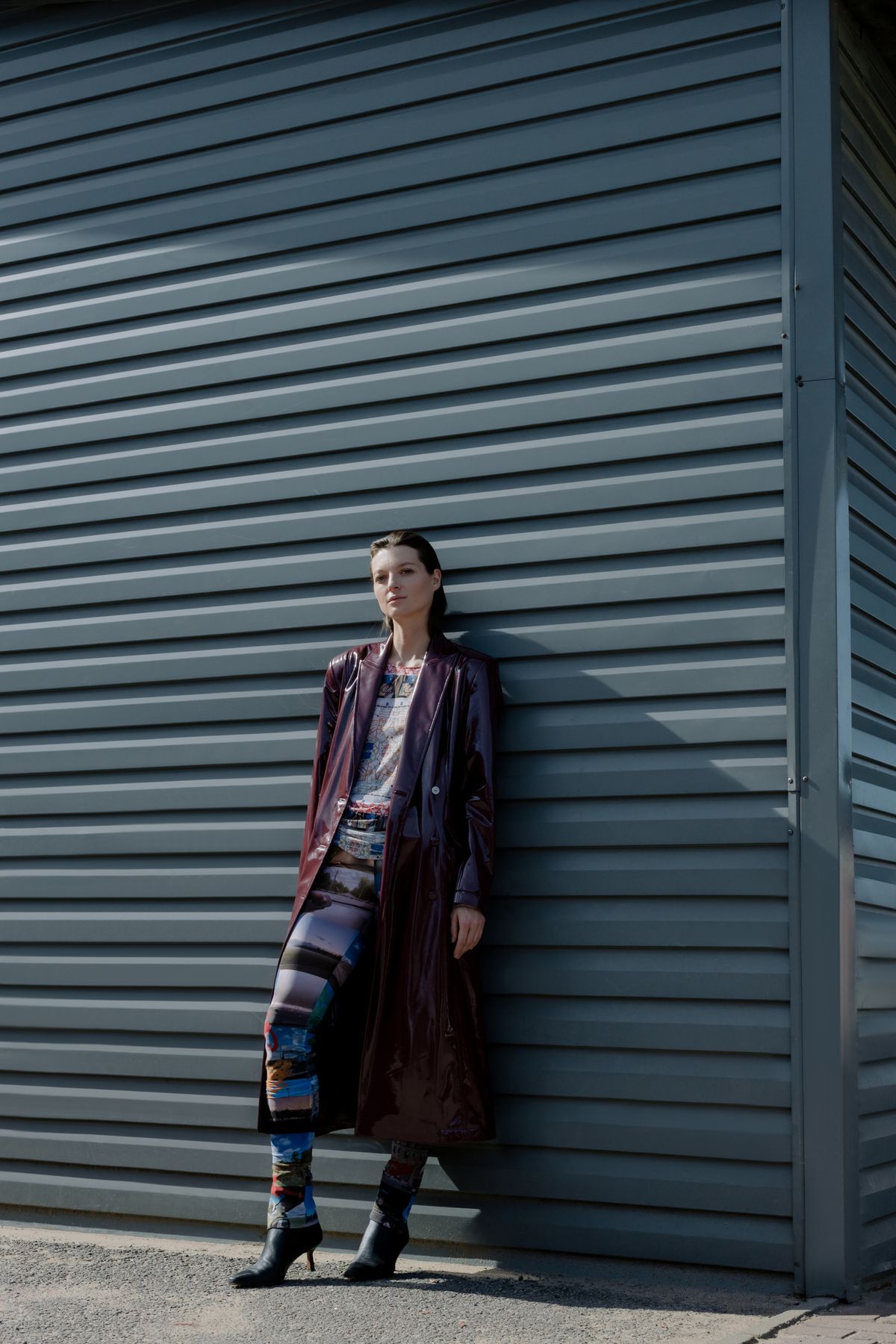
- Frame the full body when the silhouette is the story. Vertical was made for head-to-toe. Use it.
- Frame the bust-up when the styling detail is the story. Necklines, jewellery, hair — these read powerfully when the frame holds them.
- Avoid the "torso trap". Cropping at the waist or thighs is the worst possible vertical composition. It chops the silhouette and reveals nothing.
- Use upper third for movement, lower third for product. The eye scans top to bottom; reward the journey.
- Leave breathing room above the head. Subjects pressed against the top edge feel claustrophobic on a phone screen.
- Account for the UI overlay. Captions, profile icons, and like buttons cover roughly the bottom 25% on most platforms. Keep critical detail above that line.
The Caption Zone Is Real
A composition that looks balanced in a preview can be visually destroyed once a username, caption, and engagement bar overlay it. Always preview your vertical content with the platform UI mocked over it before you publish.
Motion Choreography for Short-Form
Static posing dies on social. The platforms reward motion — both the model's motion and the camera's motion. The best-performing fashion videos in 2026 share a common pattern: continuous, layered movement from the first frame to the last.
You do not need cinematic camera moves. You need purposeful ones. A slow push toward the subject. A subtle pull as they walk. A deliberate tilt that follows a fabric drop. Each motion should serve a single visual idea — never two at once, or the eye loses its anchor.
Choose One Motion Idea Per Clip
A single short-form clip should communicate exactly one motion story: a turn, a walk, a fabric reveal, a transformation. Trying to fit three ideas into ten seconds is how you make a confused video. Pick one. Commit to it.
Generate at the Right Aspect Ratio From the Start
Set your generation to 9:16 vertical from the first frame. Do not generate horizontally and crop later — you will lose composition, focus, and detail. The AI uses the entire frame as creative real estate; give it the frame you actually want to publish.
Direct the Movement Explicitly in Your Prompt
Vague prompts give vague motion. Be specific: "she walks toward the camera at a calm pace, the coat tail swinging behind her on the second step". Concrete direction produces clean, intentional motion that reads on a small screen.
Match Duration to the Story
A simple silhouette reveal can land in five seconds. A two-act story — establishing shot then reveal — needs the longer ten-second format. Choose your duration based on what the clip is saying, not on a default setting.
Sound Design for Silent Viewers
A lot of vertical video is watched with the sound off. This sounds like a problem and is actually a freedom — it means you do not have to entertain the ear. But for the viewers who do unmute, the audio decision is huge.
The trend in fashion is moving sharply away from generic licensed music and toward diegetic sound — the actual sound of the scene. The whisper of fabric. Footsteps on concrete. A door closing. Ambient room tone. These small, real sounds make vertical fashion video feel intimate and high-end in a way that another lo-fi track simply cannot.
Captions Are Now Sound
Because most viewers watch muted, your captions and on-screen text are your audio. Treat them with the same care you would a soundtrack: rhythmic, sparse, never overlapping the styling detail. Two or three words per beat is plenty.
A Sample Prompt That Actually Works
VERTICAL FASHION VIDEO PROMPT — 9:16, 5 seconds:

"Female model in cream wool coat, walking slowly toward
camera down a quiet morning street. Soft overcast light.
The coat tail catches a small breeze on the third step.
She glances toward camera once, then past it.

Framing: full body, head-to-foot vertical composition,
head in upper third, coat hem in lower third, generous
space either side. Static camera, no zoom.

Mood: confident, unhurried, editorial.
Reference: minimalist Scandinavian fashion film."Short-form is not lower craft. It is harder craft compressed into less time. The brands treating vertical as a serious format — not a leftover crop — are the ones eating everyone else's feed.
— Fittins AI Editorial
Built for the Vertical Era
Fittins AI generates fashion video natively in 9:16, 16:9, and 1:1 — choose your aspect ratio at the start of the shoot, not after. Build a content engine designed for the format your audience actually watches.
Continue reading


