
Light Is Everything: Directing AI Like a Cinematographer for Editorial Fashion
Look at any iconic fashion image and the first thing you notice is not the garment — it is the light. Most AI prompts are written in nouns. The brands producing extraordinary work are writing them in light.

Made with Fittins AI · View this image
Open the cover of any great fashion magazine and try this experiment: name what you see. The model is not the answer. The garment is not the answer. The thing your eye actually registers first — the thing that tells you in a fraction of a second whether this image is important — is the light.
Light is the single most underused tool in AI fashion content. Most creators write prompts in nouns: "a model in a black coat on a city street." A great cinematographer would never describe a scene that way. They would describe the light first — its source, its direction, its quality, its temperature — and let everything else fall into place around it. That single shift in prompt grammar is the difference between content that looks generated and content that looks directed.
Light First, Everything Else Second
Light carries much of the emotional weight of any fashion image. Treat it as the primary subject of your prompt — not an afterthought added at the end — and the perceived quality of your output can rise noticeably.
Why Most AI Fashion Looks "Lit Like a Catalogue"
The default lighting state of most AI fashion output is what photographers call flat editorial — even, frontal, medium-soft, no shadow drama. It is the lighting equivalent of a stock photo: technically fine, emotionally inert. There is a reason for this. When a prompt does not specify lighting, the AI hedges its bets and produces the safest possible illumination. Safe lighting reads as catalogue. Catalogue reads as commodity. Commodity does not stop the scroll.
The fix is not complicated, but it is non-negotiable: every prompt needs an explicit light direction. Not a hint, not a vibe — a specific instruction about where the light is coming from, what quality it has, and what it is doing to the subject.
The Six Lighting Conditions Every Creator Should Know
Golden Hour — The Honeyed Look
The hour after sunrise and the hour before sunset. Warm tones, long horizontal shadows, gentle skin glow. The default of aspirational lifestyle imagery. Use when you want the image to feel optimistic, expensive, and timeless. Prompt cue: "warm golden hour light from low camera left, long soft shadows, honey-toned skin highlights."
Overcast Diffused — The Editorial Default
A cloudy sky is the world's largest softbox. Even, flattering, no harsh shadows, true colours. This is the workhorse lighting of editorial fashion because it lets the garment lead. Prompt cue: "soft overcast daylight, even illumination, no hard shadows, accurate colour rendition." Less dramatic than golden hour but vastly more controllable.
Hard Direct Sun — The Bold Statement
Midday sun creates sharp, contrasty shadows and pushed colours. Risky if mishandled, iconic if done with intent. Used heavily in 90s editorial revival work. Prompt cue: "hard direct midday sun, sharp-edged shadows under brow and chin, high contrast, slightly overexposed highlights."
Studio Softbox — The Controlled Look
A large diffused light source close to the subject. Predictable, flattering, infinitely controllable. The lighting of e-commerce, beauty, and clean editorial. Prompt cue: "single large softbox from camera left at 45 degrees, soft fall-off into shadow, clean controlled studio aesthetic."
Rim and Backlit — The Silhouette Game
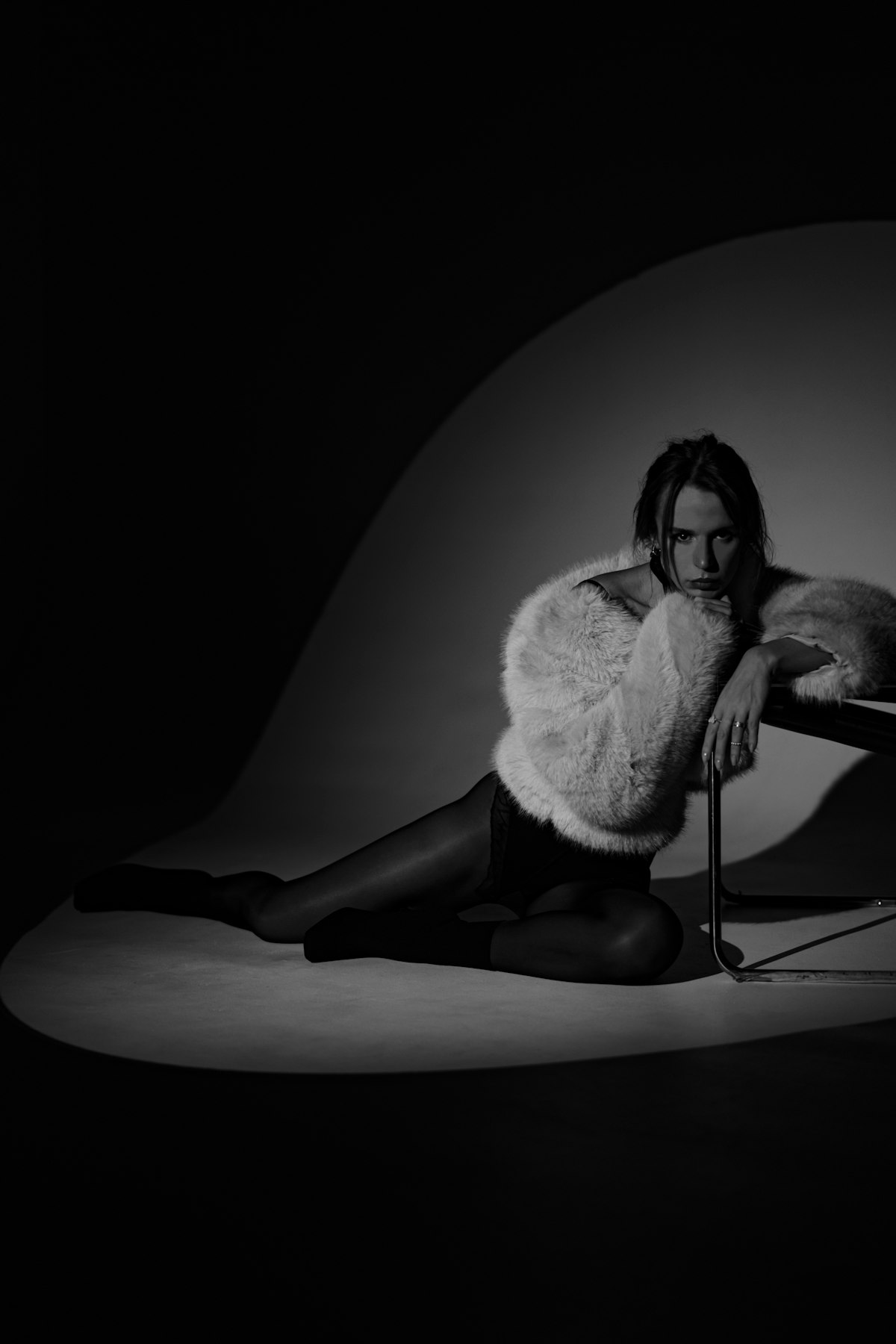
Light from behind the subject creates a halo around hair and shoulders, often with the face in shadow. Cinematic, dramatic, used heavily in luxury and fragrance work. Prompt cue: "strong rim light from directly behind, illuminating the hair edge and shoulder line, face mostly in shadow, dark backdrop."
Practical and Available — The Real-World Look
Light from neon signs, lamps, windows, screens — sources actually present in the scene. Reads as authentic, contemporary, lived-in. Trending heavily in young brand work. Prompt cue: "lit only by warm neon storefront sign and window glow, mixed colour temperatures, faintly underexposed, available-light aesthetic."
Match Light to Brand Mood
Heritage brands lean overcast diffused (the look of timeless catalogue). Aspirational lifestyle brands lean golden hour (the look of the good life). Edgy contemporary brands lean rim light or practical (the look of "after dark"). Pick your lighting condition once, lock it across your content, and the brand identity does the work for you.
The Direction Question
After the light quality comes the question of where it comes from. Direction transforms the same source into completely different images. Front light flattens. Side light sculpts. Back light silhouettes. Top light dramatises. Most prompts say nothing about direction and leave the AI to guess — usually badly.
The Direction Vocabulary You Need
- Front light — flat, even, low drama. Good for clean catalogue and beauty work.
- 45-degree key (camera left or right) — the editorial default. Sculpts the face and garment without harshness.
- Side light (90 degrees) — strong shadow on the off-side. Creates drama, reveals texture, looks photographic.
- Back light (180 degrees) — silhouette and rim halo. Cinematic, mysterious, luxury-coded.
- Top light — sharp shadows under brow and chin. Theatrical. Use sparingly and intentionally.
- Window light — soft, directional, slightly diffused. The most flattering single source available.
Time-of-Day Language
GOLDEN HOUR (warm, long shadows, optimism):
"Late afternoon golden hour light from low camera right,
warm honeyed skin tones, long horizontal shadows."

BLUE HOUR (cool, soft, melancholy):
"Cool blue hour twilight, the last light from a darkening
sky, soft cyan-magenta gradient, low-contrast shadows."

NIGHT / PRACTICAL (mixed, neon, contemporary):
"Late-night street lit by mixed neon signage, warm window
glow on the right of frame, cool sodium streetlight on the
left, deep shadow falling between them."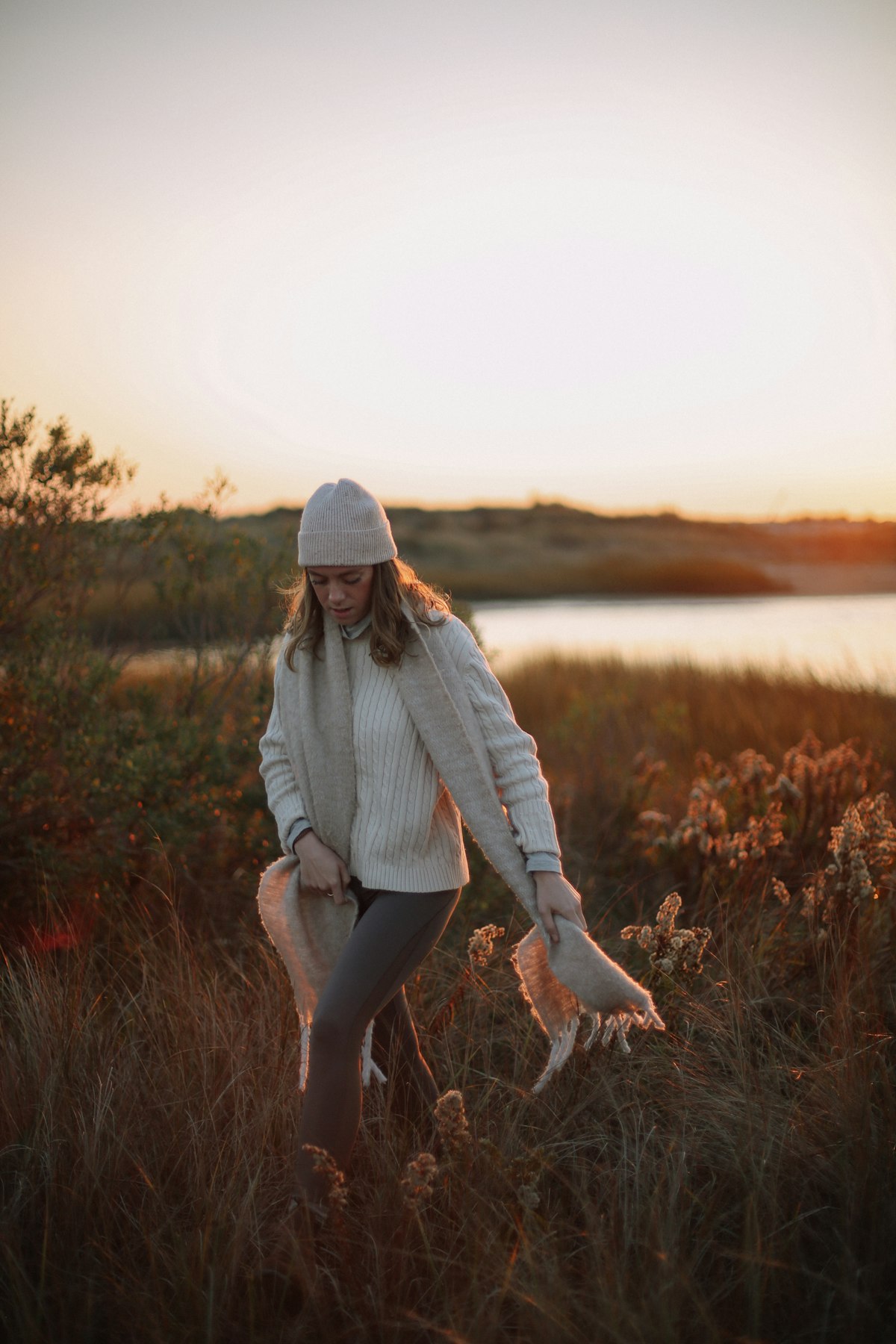
Layering Light Like a Cinematographer
The most cinematic AI fashion images do not use a single light source — they layer multiple. The classical structure borrowed from film is the three-light system: a key light that defines the subject, a fill light that softens the shadows, and a rim or back light that separates the subject from the background. You can prompt all three in a single sentence, and the result is output that looks deliberately lit, not just illuminated.
The Three-Light Sentence
Try this template: "Key light from [direction] at [intensity], fill light from [opposite side] at half intensity, rim light from behind catching [feature]." It feels mechanical written out, but it produces remarkably consistent cinematic output. Adjust the percentages and directions to taste.
When You Need to Match a Brand's Existing Look
If you are creating content for a brand that already has a visual identity, the lighting is half of what you need to match. Pull three or four reference images from their existing campaigns. Describe what the light is doing in those references — direction, quality, colour temperature, contrast level — and feed that description into every prompt going forward. Your output will start to belong inside the brand world automatically.
This is the unglamorous secret of brand-coherent AI content: light is the through-line. Match the light and the rest follows.
Anyone can write a prompt that names a model and a garment. The people whose work you actually remember are writing prompts that describe light. That is the entire game.
— Fittins AI Editorial
Direct With Intent
Fittins AI gives you the prompt depth, model tiers, and up to 8K image quality (from Creator Starter) needed to render light precisely the way a cinematographer would. Stop accepting flat output. Start directing the light.
Continue reading


