

How AI is Revolutionizing Fashion Photography
How AI is fundamentally restructuring fashion photography economics, creative possibilities, and professional workflows. From cost analysis to photography-grade prompting techniques, the complete guide to AI-powered fashion imagery.

Made with Fittins AI · View this image
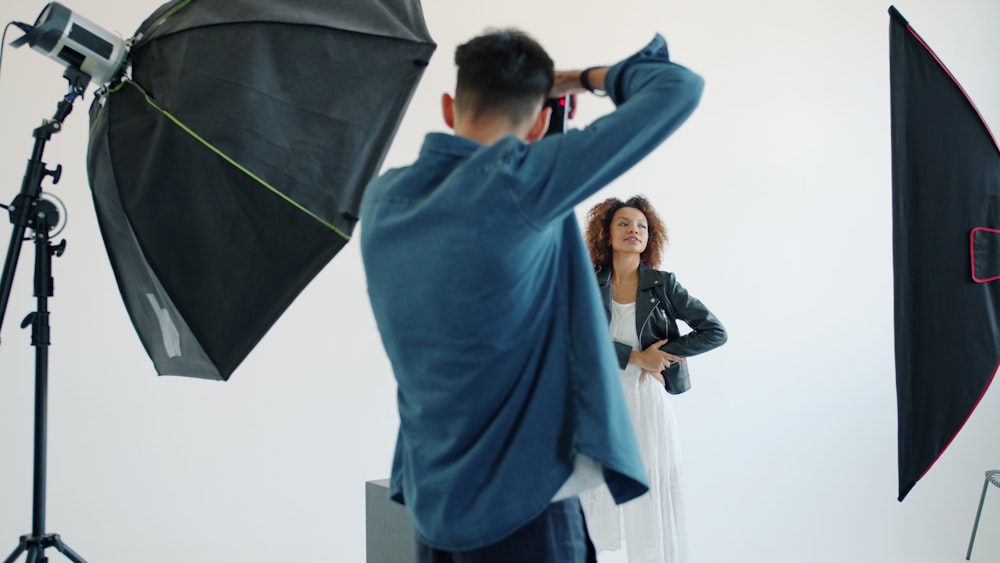
Fashion photography has been one of the most expensive, logistically complex, and time-intensive aspects of running a fashion brand. A single editorial shoot can cost tens of thousands of dollars, require weeks of planning, and depend on the coordination of dozens of professionals. AI-powered image generation is not simply reducing these costs; it is fundamentally reimagining what fashion photography can be, who can produce it, and how quickly it can happen.
This article provides a comprehensive analysis of AI's impact on fashion photography: the economics that are changing, the creative possibilities that are expanding, the professional workflows that are emerging, and the practical strategies that brands of every size are using to leverage AI for their visual content needs.
The Economics: A Complete Cost Restructuring
To understand the revolution, you need to understand the economics it is disrupting. Traditional fashion photography involves multiple cost centers that AI either eliminates or dramatically reduces.
Traditional Fashion Photography Cost Breakdown:
- Photographer day rate -- $2,000 to $15,000+ depending on experience and reputation. A typical catalog shoot requires 2-5 shooting days.
- Model fees -- $500 to $5,000+ per day per model. Most shoots require at least one model, campaigns often require multiple.
- Studio rental -- $500 to $3,000+ per day for a professional photography studio with cyclorama and basic lighting.
- Styling, hair, and makeup -- $500 to $2,000+ per professional per day. A typical shoot employs a stylist, hair artist, and makeup artist.
- Equipment rental -- $200 to $1,000 per day for specialized lighting, grip equipment, and camera accessories beyond what the photographer provides.
- Post-production -- $15 to $75 per image for professional retouching. A 50-image shoot can cost $750 to $3,750 in retouching alone.
- Logistics -- Catering, transportation, sample shipping, location permits, and coordination overhead add 10-20% to total costs.
Add these together and a modest e-commerce product shoot for 50 items costs $15,000 to $50,000. A campaign shoot with multiple locations and premium talent can easily exceed $100,000. For independent and small brands, these numbers represent an impossible barrier to producing the visual quality that modern consumers expect.
The AI Alternative
A Fittins AI Creator Pro subscription ($27/month for 3,000 credits) costs less than a single day of studio rental. For that monthly investment, a brand gets the Turbo, Default, and Premium model tiers (Ultra starts at Creator Business) and enough credits for about 75 images a month at default settings (40 credits each). The total annual cost of AI content production can be less than a single traditional photoshoot.
Creative Possibilities: Beyond Physical Constraints
Cost reduction is compelling, but the creative expansion AI enables may be even more significant. Traditional photography is bound by physical reality: you can only shoot in locations you can access, with models who are available, under weather conditions you cannot control, within the hours of daylight or studio rental you have booked.
AI generation removes all of these constraints. A single prompt can place your garments in any setting imaginable: a sun-drenched Mediterranean terrace, a neon-lit Tokyo street, a minimalist Scandinavian interior, or a fantastical environment that exists nowhere in the physical world. You can visualize your collection across seasons without waiting for weather to change, across cultures without international travel, and across moods without rebuilding sets.
Unlimited Location Diversity
A traditional lookbook might feature one or two locations due to budget constraints. With AI, every single image can have a unique, perfectly-suited background. An evening gown photographed against a grand marble staircase with golden chandelier light. A casual streetwear look set against a gritty urban wall with morning sun. A resort collection shown on a white sand beach with turquoise water. Each image tells its own visual story, and the total cost is identical to generating them all on a white background.
Consistent Virtual Models
With Fittins AI's custom character system, brands can create a consistent virtual model that appears across all their content. This character never gets tired, never has scheduling conflicts, stays consistent across hundreds of images, and can be placed in any setting wearing any outfit at any time. For brands building a strong visual identity, this consistency is invaluable.
Consistent Color Variant Photography
One of the most practical applications is color variant photography. Fittins AI does not recolor existing images, but if you upload a product photo of each colorway, such as a jacket in navy, black, tan, olive, and burgundy, you can generate each one on the same AI model, in the same location, with the same prompt, so the set stays consistent. A traditional approach would require a separate shoot for every color.
The Model Tier System: Matching Quality to Purpose
One of the most important innovations in AI fashion photography is the ability to choose different quality levels for different purposes. The Fittins AI platform provides four model tiers, each suited to a specific stage of the creative and production process.
Model Tiers for Photography:
- Turbo -- Lightning-fast generation at the lowest credit cost. Perfect for concept testing, mood boards, and rapid creative exploration. Captures composition and color accurately but simplifies fabric and skin detail.
- Default -- Professional-grade photorealism suitable for everyday content production. Accurate fabric rendering, natural skin, and convincing lighting make this the workhorse tier for social media and standard e-commerce imagery.
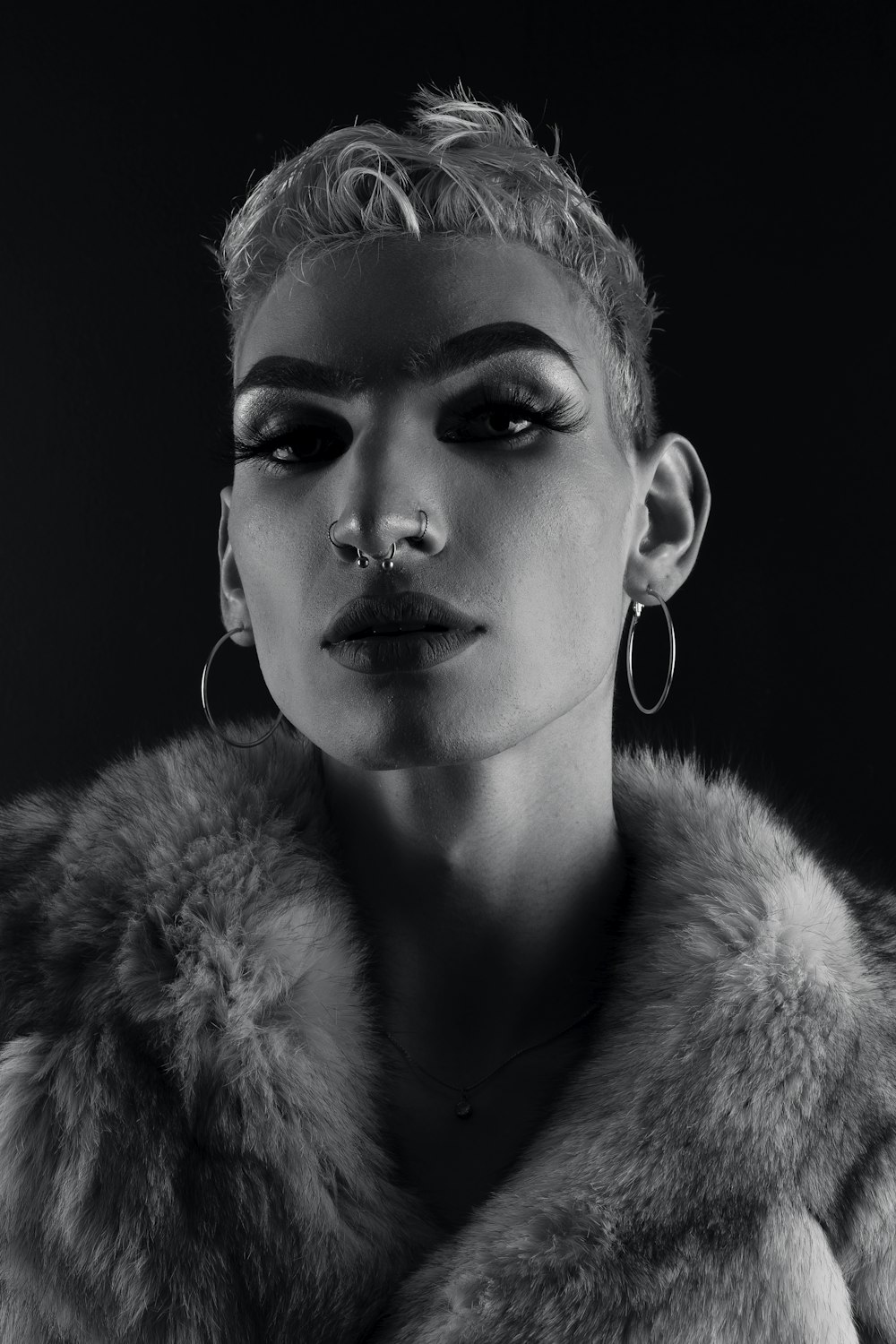
- Premium -- Editorial-grade quality with thread-level fabric detail, pore-level skin realism, and physically accurate lighting. The minimum tier for content destined for print, large-format display, or close scrutiny.
- Ultra -- Studio master photography grade. Thread-level fabric accuracy, subsurface light scattering, volumetric effects, and medium-format depth of field rendering. Reserved for campaign heroes, portfolio-grade work, and any context demanding the absolute highest quality.
The Professional Workflow
The most cost-efficient approach mirrors how traditional photographers work: explore broadly at low cost (Turbo), refine promising directions at moderate cost (Default), polish near-final concepts at higher cost (Premium), and produce the final masterpiece at maximum quality (Ultra). This tiered workflow usually costs much less than running everything at the highest tier, and the final images benefit from prompts refined along the way.
The Hybrid Model: AI Plus Traditional Photography
The most sophisticated brands are not choosing between AI and traditional photography. They are developing hybrid workflows that capture the best of both approaches.
The Hybrid Approach:
- AI for volume -- Use AI generation for the high-volume content that fills e-commerce catalogs, social media feeds, and marketing emails. This is where AI's cost and speed advantages are most impactful.
- Traditional for flagship -- Reserve traditional photography for flagship campaign imagery, brand films, and editorial content where the irreplaceable energy of a live shoot, the spontaneity of a real model, and the collaborative magic of a creative team add genuine value.
- AI for pre-production -- Use AI to pre-visualize traditional photoshoots. Generate AI concepts to test creative directions, plan layouts, and refine styling before the cameras roll. This reduces the number of traditional shoot days needed and increases the productivity of each day.
- AI to extend traditional shoots -- Use photos of the same products as inputs to generate new on-model images in other settings, seasons, and colorways (with a photo of each colorway). Fittins AI does not edit the original photos themselves.
Cost Comparison
A hybrid AI/traditional workflow lets a brand use AI for the large share of content that needs to be professional and consistent, and traditional photography for the smaller share that needs to be extraordinary and emotionally resonant. Track your own cost per image and total output before and after the switch to measure the effect.
Photography-Grade Prompting: The New Skill
AI fashion photography introduces a new professional skill: photography-grade prompting. The quality of AI-generated fashion images is directly proportional to the photographic knowledge embedded in the prompt. A prompt that says "nice lighting" produces generic illumination. A prompt that specifies "three-point studio lighting with a large octabox key at 45 degrees camera-right, a silver reflector fill, and a narrow hair light from above-behind at 5600K" produces an image that looks like it was shot by a professional photographer.
Basic Prompt (Generic Result):
"A model wearing a red dress, nice lighting"

Photography-Grade Prompt (Professional Result):
"A model in a crimson silk charmeuse bias-cut dress with liquid
drape, standing in a minimalist white studio, shot with a
Hasselblad X2D with 110mm f/2.5 lens at f/2.8, three-point
lighting: large octabox key at 45 degrees camera-right, silver
reflector fill at half-power camera-left, hair light from
above-behind, color temperature 5200K, shallow depth of field
with medium-format bokeh, natural skin texture with pore-level
detail, editorial fashion photography"
The Fittins AI Premium (from Creator Starter) and Ultra (from Creator Business) model tiers respond well to professional photography language: camera body references, lens specifications, aperture values, lighting setups, modifier names, color temperatures, and depth of field descriptions all help steer the generated output.
Three Steps to Maximum Photorealism
For maximum photorealism, professional creators on Fittins AI make three choices before they press generate.
Generate at the Right Tier
Start with Premium (from Creator Starter) or Ultra (from Creator Business) for any content that demands maximum photorealism. The higher tiers produce more genuine detail in fabric, skin, and lighting.
Write a Photography-Grade Prompt
Fittins AI has no separate realism filter, so the detail comes from your direction. Use the written prompt (up to 1,500 characters) to specify lens, lighting setup, color temperature, and fabric behavior, as described above. This helps bridge the last perceptual gap between AI generation and traditional photography.
Choose High-Resolution Quality
Select 2K, 4K, or 8K image quality (available from Creator Starter; 1K on every plan) when you generate, so the final image is high-resolution and ready for print, large-format display, or e-commerce zoom.
AI does not replace the fashion photographer. It replaces the limitations that made professional fashion photography inaccessible to most brands. The creative eye still matters. The six-figure production budget no longer has to.
— Fittins AI Team