

How to Direct Model Poses and Body Language, Step by Step
A great pose sells the garment; a stiff one kills the image. This tutorial gives you a repeatable system for directing pose, gesture, and gaze in AI fashion generation — the way a photographer directs a model on set.

Made with Fittins AI · View this image
You can generate a perfect model in a perfect garment and still get a lifeless image. The culprit is almost always the pose. On a real set, a photographer spends the whole day on exactly this — "chin down, weight on the back foot, look just past the lens." You can direct an AI model the same way, and this tutorial gives you the exact vocabulary and workflow to do it.
The Shift
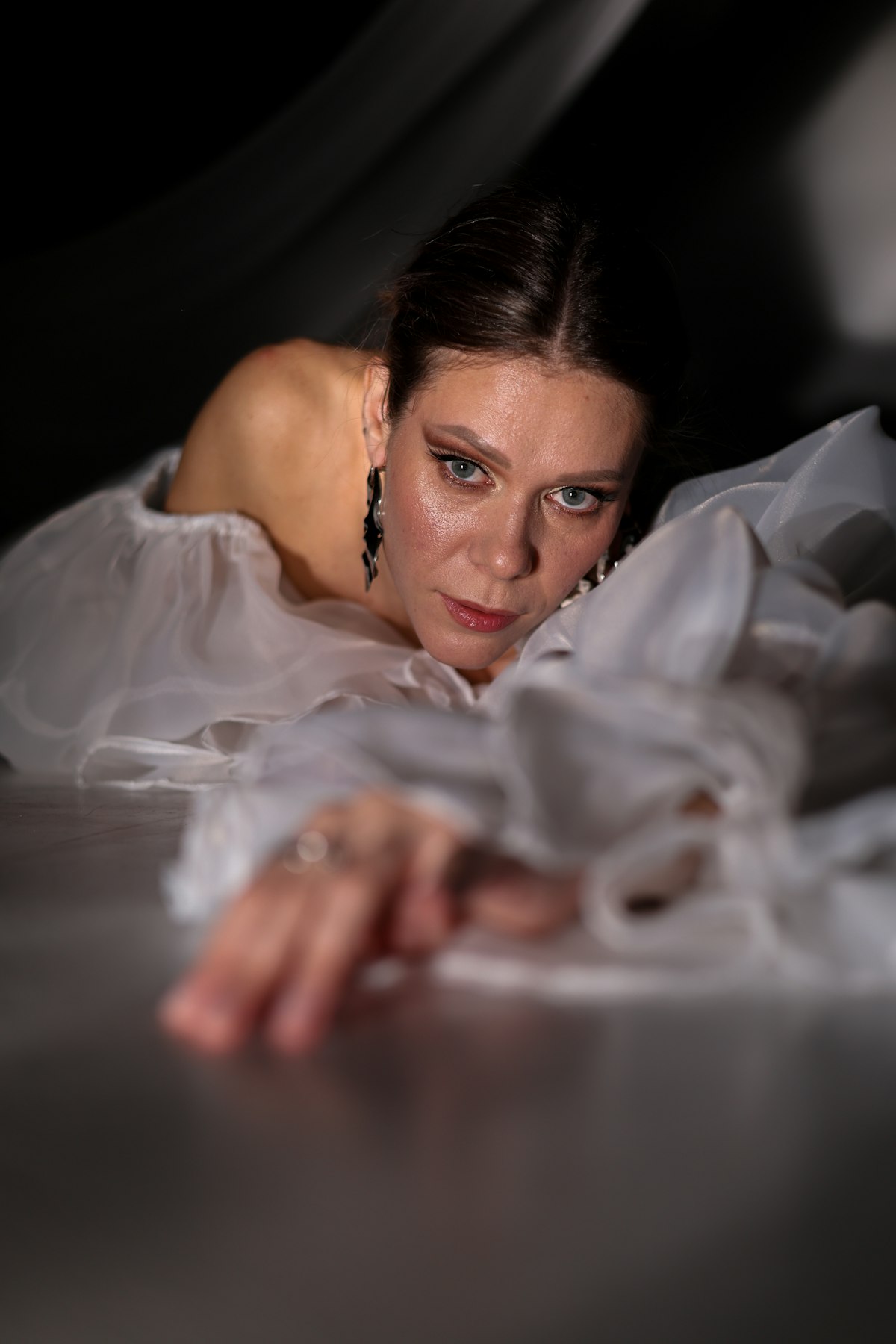
Stop prompting "a model wearing a coat". Start directing "a model mid-stride, weight forward, one hand grazing the lapel, gaze off-camera". Specific posture is what turns a catalog shot into an editorial moment.
Build a Pose Vocabulary
Professional models work from a library of named poses and micro-adjustments. You want that same library in words. Learn these five building blocks and you can describe almost any pose precisely.
The Five Building Blocks
- Weight — "weight on the back leg", "contrapposto", "leaning". Asymmetry reads natural.
- Hands — the hardest part. Always give them a job: "in pocket", "grazing the collar".
- Head & gaze — "chin slightly down", "three-quarter turn", "looking off-camera".
- Motion — "mid-stride", "turning toward camera", "coat caught in the wind".
- Energy — "relaxed and candid", "powerful and grounded", "playful", "pensive".
Step-by-Step: Directing a Pose
Decide the feeling first
Answer one question before you write anything: what should the viewer feel — confident, dreamy, rebellious? The emotional target drives every posture choice that follows.
Stack the blocks in order
Describe the pose in a fixed order — weight, then hands, then head and gaze, then motion, then energy. Building it the same way every time keeps you from forgetting the hands and keeps results consistent.
Match the pose to the garment
Let the fabric decide. Structured, tailored pieces want still, architectural poses; soft, fluid pieces want movement and turning; casualwear wants candid, off-guard energy.
Generate a small set of variations
Produce three or more poses of the same look — one still, one in motion, one seated. A real shoot delivers options; the "safe" pose is rarely the one that stops the scroll.
Save your winners
When a pose description produces gold, save the wording in your own notes as a personal pose library. Over time you build your own shorthand — "the confident lean", "the walking-away hero" — and reuse it forever.
Garment: floor-length silk slip dress.
Weight: slow turn away from camera, weight on back foot.
Hands: one hand lifting the hem slightly.
Head & gaze: glancing back over the shoulder toward lens.
Motion: fabric trailing, gentle movement.
Energy: fluid, cinematic, unhurried.
Why: movement reveals the drape and weight of the silk.Solve the Hands First
When a pose looks "off", it is usually the hands. Give them an explicit job — holding, touching, pocketed, resting — and never leave them unspecified. This one habit fixes most bad poses.
Gaze and Emotion: The Invisible Half
Where the model looks changes the whole story. A direct gaze into the lens is confident and confrontational. A gaze off-frame is aspirational and cinematic. Eyes down is intimate and soft. None is "correct" — each sells a different feeling, so choose it deliberately to match your brand.
Match Energy to Brand
A playful skip under a solemn luxury brand breaks trust; a stiff, formal stance under a fun streetwear brand feels wrong. The pose’s energy must match your brand personality every time.
Common Pose Mistakes
Red Flags to Catch
- Perfect frontal symmetry — reads as a mugshot. Add a turn or weight shift.
- Floating, purposeless hands — always give them a job.
- A pose that hides the garment’s best feature — the pose must serve the clothes.
- The same pose in every frame of a campaign — vary posture to keep a feed alive.
- Energy that contradicts the brand.
Direction is everything. A model can say more with the angle of a chin than a season of design can say on its own.
— Fittins AI Team
Direct Like a Pro in Fittins AI
Fittins AI lets you iterate poses on the same model and garment in about a minute per image, with several generations running at the same time, so you can shoot a full roll of variations and keep only the frames that sell. Keep your pose library in your own notes and reuse your best direction on every look.
Continue reading

