

The Color Code: Building a Signature Color Palette for Your AI Fashion Brand
The fastest way to make AI-generated fashion content look like it belongs to one brand is a disciplined color palette. Here is how to define, prompt, and enforce your signature colors.

Made with Fittins AI · View this image
Scroll through any fashion brand you actually recognize and cover the logo. You can still name it. That is not an accident — it is color. Before a customer reads a single word, they feel your palette. In the AI era, when you can generate a hundred images before lunch, color is also the single most powerful lever you have for making all of those images feel like they came from one studio, not fifty different ones.
This guide is about turning color from a happy accident into a repeatable system — one you can prompt, enforce, and scale.
Why This Matters
Signature color is one of the strongest cues customers use to recognize a brand. For an AI-first brand publishing dozens of images a week, a locked palette is the difference between a feed that looks curated and one that looks like a stock library.
Start With a Palette, Not a Prompt
The mistake most creators make is choosing colors per image. They open a generator, type a description, and take whatever palette the model happens to produce. The result is a feed that is technically beautiful and completely incoherent.
Flip the order. Define your palette once, as a brand decision, and then bend every generation toward it. A strong fashion palette almost always has four roles.
The Four Roles of a Fashion Palette
- Anchor — your dominant neutral (a warm sand, a cool charcoal, an off-white). This is 50–60% of every frame.
- Signature — the one color people will associate with you (a specific terracotta, a deep olive, a dusty rose). Used with restraint, it becomes yours.
- Support — one or two secondary tones that harmonize with the signature and give you range across a collection.
- Accent — a small, high-energy pop used in under 10% of the frame: a lip, a shoe, a piece of hardware.

The 60-30-10 Rule
Borrow the interior designer’s ratio: 60% anchor, 30% support, 10% accent. When a generated image feels chaotic, it is almost always because those proportions slipped. Regenerate rather than fight it in editing.
Translating Color Into Prompt Language
Models do not understand hex codes reliably, but they understand named, evocative color language extremely well. "Beige" is weak. "Warm oat and toasted almond, soft matte finish" is strong. The trick is to describe color the way a stylist briefs a shoot — with material and mood attached.
Editorial fashion photograph.
Palette: warm oat anchor, toasted-terracotta signature knit,
  faded sage support trousers, single brushed-gold accent (earrings).
Set: sunlit plaster wall, matching oat tone, soft shadow.
Finish: matte, low-saturation, gentle warm grade.
Avoid: bright primary colors, blue cast, neon.Notice three things. The colors are attached to specific garments so the model knows where to place them. The set is deliberately built from the anchor tone so the background never fights the wardrobe. And a short negative list ("avoid") fences off the colors that would break your identity.
Warm vs. Cool Is a Brand Decision
Pick a temperature and commit. Warm palettes (oat, terracotta, camel) feel human, artisanal, and inviting. Cool palettes (slate, ice, deep navy) feel modern, precise, and premium. Mixing temperatures randomly is the fastest way to look accidental.
Controlling the Background and the Light
Half of a photo’s color comes from things that are not the clothes: the wall, the floor, the light. Amateur feeds let backgrounds run wild — one shot on a white cyclorama, the next in a green forest, the next on a red street. Even with perfect wardrobe, the palette collapses.
Build a small, repeatable library of on-palette environments and lighting recipes, and reuse them the way a magazine reuses a studio.
Pick two or three signature backdrops
For example: a warm plaster wall, a sand-toned seamless, and a golden-hour exterior. All three should sit inside your anchor tone. Save these as reusable location descriptions so every future shoot can pull from the same world.
Lock a lighting mood
Decide whether you are a soft, diffused, overcast brand or a hard, directional, high-contrast brand. Light temperature shifts every color in frame, so a consistent light recipe is really a color decision in disguise.
Grade everything the same way
A consistent final color grade — the same subtle warmth, the same lifted shadows — is the “glue layer” that ties a whole campaign together, even across different garments and models.
Building a Palette That Survives a Full Collection
A single hero color is easy. The real test is a 20-piece collection or a year of seasonal drops. This is where the support colors earn their place: they let you evolve — a cooler winter, a brighter spring — without ever abandoning the anchor and signature that customers recognize.
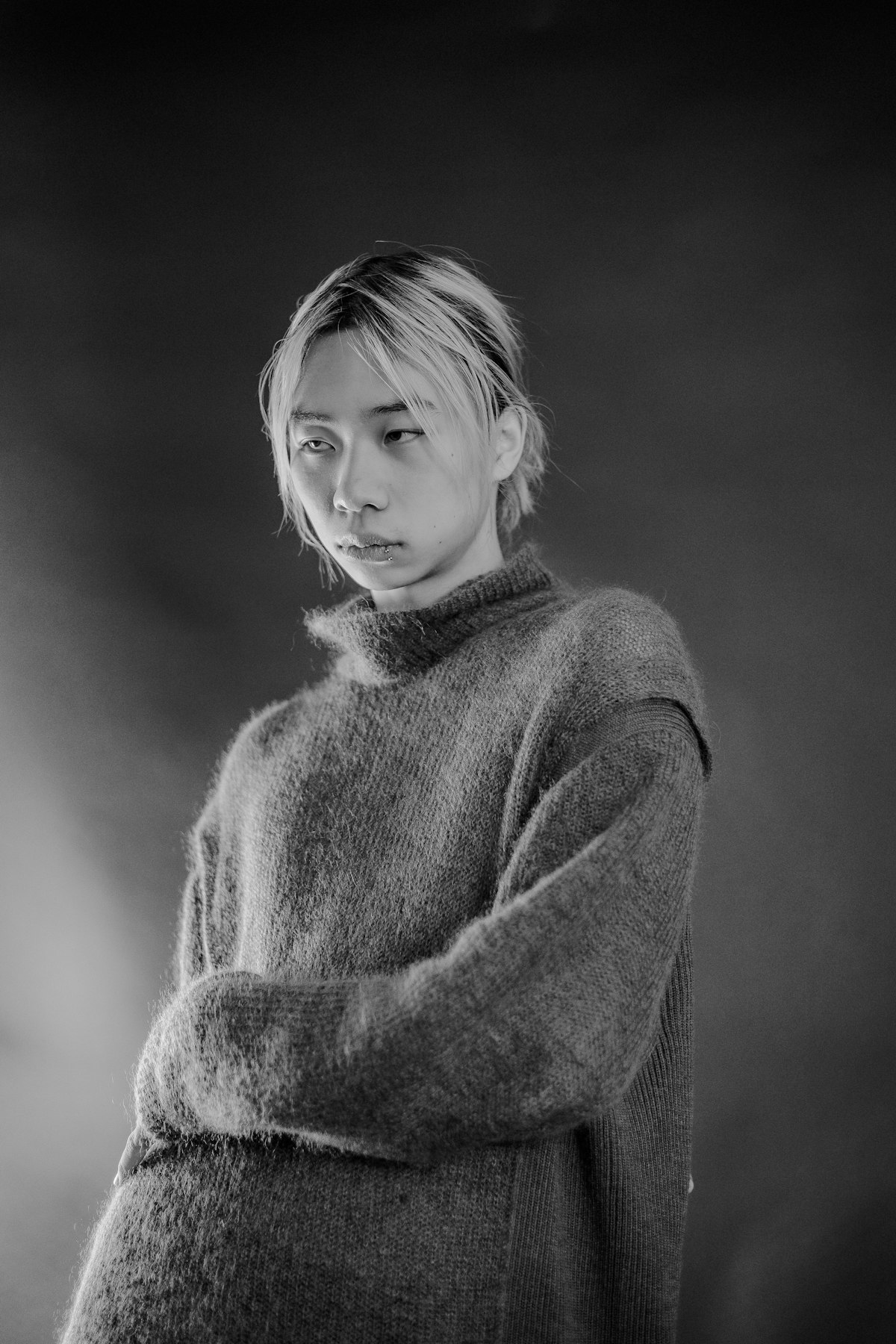
The best is the simplest. Color that is disciplined reads as luxury; color that is loud reads as noise.
— Fittins AI Editorial
A Quick Self-Audit
Is Your Palette Actually Working?
- Screenshot your last nine images as a 3×3 grid. Do they feel like one brand or nine?
- Can you name your signature color in one word? If not, your audience can’t either.
- Is there a color appearing in your feed that is not in your palette? Find it and cut it.
- Does your background tone fight your wardrobe in any frame? Rebuild that environment.
- If you removed your logo entirely, would the palette alone still say “you”?
The Grid Test
The 3×3 grid test is the single fastest quality check in this article. Do it weekly. A brand feed lives or dies as a grid, not as individual posts.
Make It Repeatable in Fittins AI
With Fittins AI you can save custom locations, reuse your signature backdrops, and keep the same custom models across every generation. Write your palette into every prompt, and your colors stay consistent from the first image to the thousandth. Define your color code once, then apply it in every generation.
Continue reading


