

Beyond the Garment: Why Your Location Is Your Most Underused Brand Tool
In fashion content, scene is half the story — yet most creators treat backgrounds as an afterthought. Here is how to use AI-generated locations to build a recognisable brand world that does as much work as the clothes.

Made with Fittins AI · View this image
Picture a Ralph Lauren ad. You can probably see it before you finish reading the sentence — the long horse paddock, the rambling New England estate, the warm late-afternoon light. Now picture a Jacquemus ad: white stone, Provence sun, a single chair against an enormous wall. Or a Saint Laurent campaign: black-mirrored Paris night, neon bleeding into wet pavement.
Notice what just happened. You did not picture the clothes. You pictured the world. And that world is doing roughly half the brand-building work in any image those houses publish. Most AI fashion content gets this exactly backward — obsessing over the garment, treating the location as something to fill in later. It is the most expensive mistake the medium has.
The 50/50 Rule
In a piece of fashion content, garment and scene each carry roughly half the storytelling weight. Treat your locations with the same care you treat your collection, and the brand recognition compounds with every post.
Why Generic Backgrounds Are Killing Your Brand
Open most AI-generated fashion feeds and you will see the same handful of generic settings repeated endlessly: a vague city street, a beige studio backdrop, a featureless beach, a cobblestone alley that could be anywhere in Europe. Each one is fine in isolation. Together they communicate nothing.
A scene only carries brand meaning when it is specific. A generic city street says nothing. A narrow Tokyo alley with neon kanji and a vending machine glow says everything. The specificity is the story. The story is the brand.
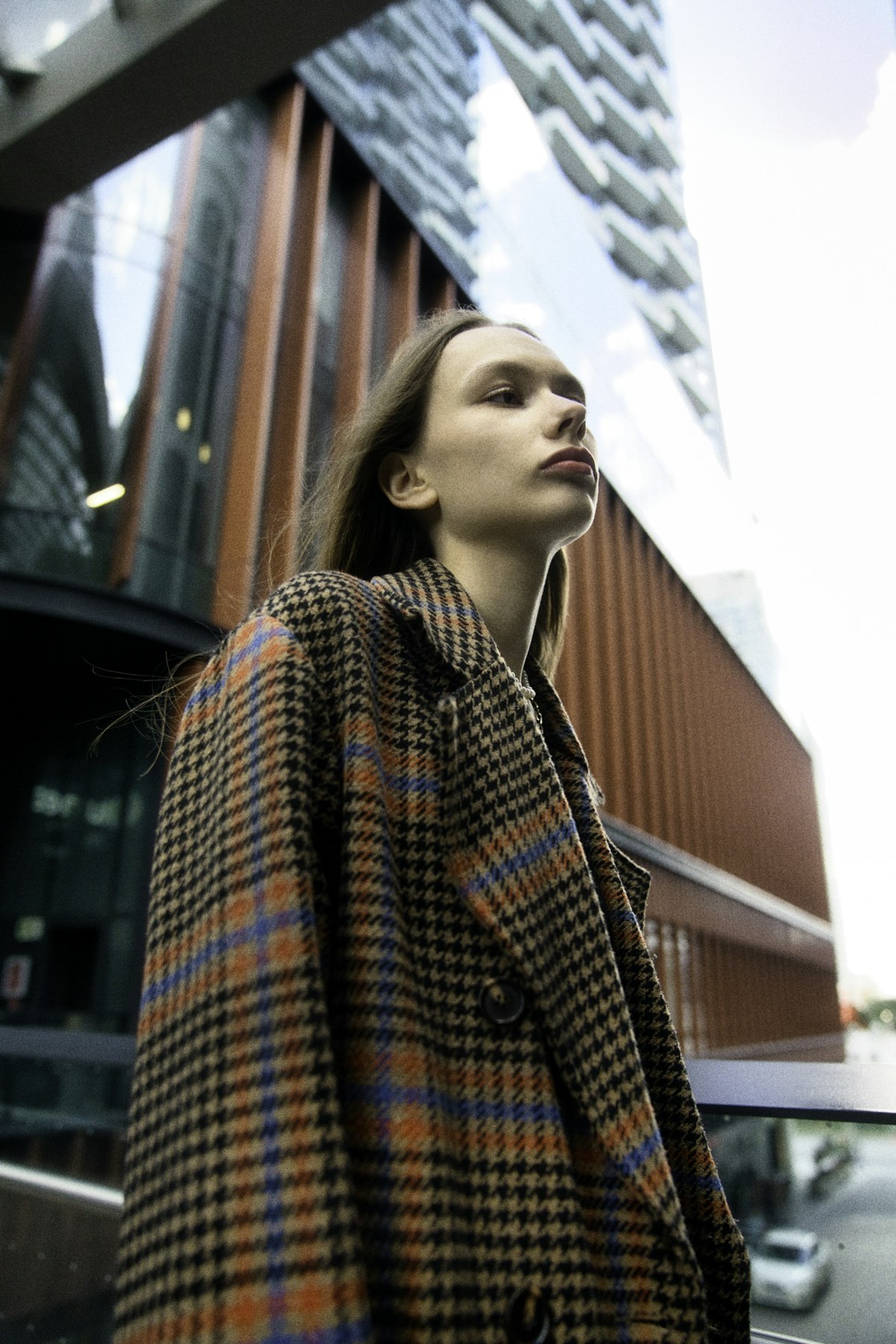
What Your Brand World Actually Communicates
A scene encodes information the garment alone cannot. It tells the viewer who this brand is for, where they go, what they value, what aesthetic universe they live inside. Get this right and a single image can do the work of a paragraph of copy.
What a Scene Communicates Before the Eye Even Reaches the Garment
- Socioeconomic context — a marble lobby reads differently than a sun-bleached coastal village
- Cultural reference — Tokyo, Marrakech, Copenhagen and Mexico City each carry distinct visual codes
- Time and pace of life — golden-hour calm reads differently than fluorescent late-night
- Wealth signalling — restraint in a wealthy setting often outsells opulence everywhere
- Audience self-identification — viewers ask "is this place me?" before they ask "is this garment me?"
The Aspirational Test
Ask one question of every scene you generate: would my ideal customer want to be standing here, even without the garment? If the answer is no, the scene is not pulling its weight — and the garment will have to carry the entire emotional load alone.
Building a Reusable Location Library
The same logic that drives custom AI models applies to scene: save once, reuse forever. The strongest fashion brands are quietly building libraries of three to seven signature locations that show up across every campaign. The repetition is not laziness — it is brand-building. By the fifth time the audience sees that particular sun-soaked terrace or that specific marble corridor, the location belongs to the brand. It is recognised on sight.
Define Your Brand World in Three Sentences
Before generating anything, write down the world your brand inhabits. Geography, climate, era, social context, palette. "Northern coastal in late summer, soft overcast light, weathered timber, generous interiors with sea views." That brief becomes the constraint that keeps every location coherent.
Generate a Wide First Pass of Candidate Locations
Produce twenty or thirty candidate scenes that fit the brief. Vary the time of day, the angle, the level of intimacy versus grandeur. You are casting locations the same way you cast a muse — looking for the few that feel undeniable.
Curate Down to Three to Seven Signatures
Resist the urge to keep too many. A library of forty locations is a library of nothing. Three to seven distinct, recognisable scenes is the sweet spot — enough variety for a season of content, focused enough to build recognition.
Save Each as a Reusable Location Asset
Create each one as a custom location so you can pull the same scene into future shoots without re-prompting from scratch. Custom locations cost 40 credits each, and plans allow 10 (Creator Kickstart and Starter), 50 (Creator Pro and Business), or 100 (Creator Enterprise); the Free plan has none. The consistency this produces is the whole point — the same archway, the same window light, the same reflection in the same floor, week after week.
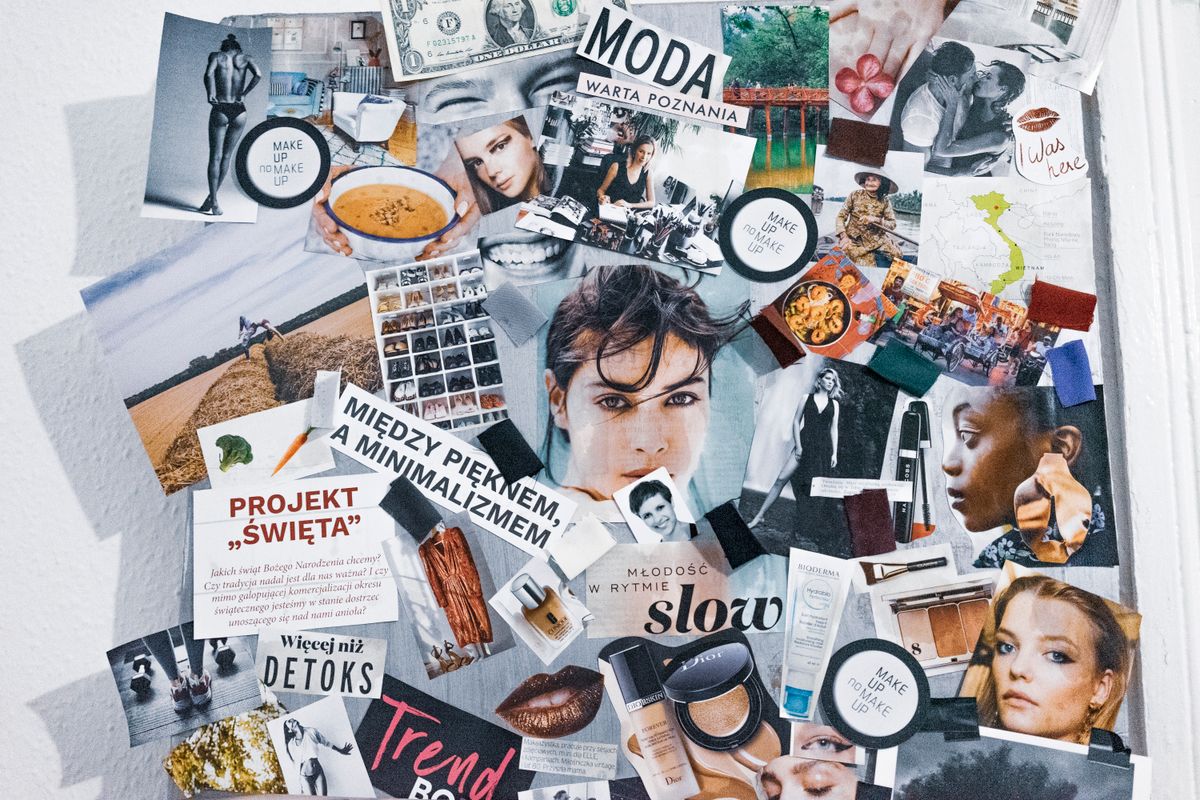
Prompt Architecture for Memorable Scenes
A great scene prompt is not a list of nouns. It is a layered description that tells the AI four distinct things: what the place is, when you are there, what the light is doing, and what the camera feels like. Skip any of those layers and you get the generic backdrop problem all over again.
❌ THIN ("what" only):
"A Mediterranean villa terrace."

✅ LAYERED (what + when + light + camera):
"A whitewashed Mediterranean villa terrace at the very
end of golden hour — long shadows, the last warm slice
of sun across stone tiles, the sea visible through an
arched stone doorway. Linen curtains lifted by a faint
breeze. Camera positioned low and slightly back, shot
on 50mm, soft natural fill, no artificial light."Light Is the Soul of Place
Two photographs of the same location at different times of day can feel like two different worlds. When you save a signature location, lock the time of day and light condition with it. That light is half of why the scene reads as yours.
Pairing Muse and Scene: The Casting Logic
Once you have a digital muse and a location library, the real creative work begins: pairing them. Not every muse belongs in every scene, and a thoughtful mismatch is usually more interesting than an obvious match. The serene muse in the chaotic location. The high-energy character in the empty room. The contrast is where the story lives.
The brands that get this right end up with content that feels designed at every level — not three good elements (muse, garment, location) sitting next to each other, but three good elements talking to each other in every frame. That conversation is what looks like art instead of output.
A great location does not just hold the model. It is having a conversation with her. The viewer feels that conversation even if they could never name it.
— Fittins AI Editorial
A Quick Self-Audit For Your Last Five Pieces of Content
- Could a stranger guess your brand from the location alone — no garment, no logo?
- Have you used the same recognisable scene more than twice this season?
- Does each scene tell the viewer something the garment does not say?
- Would your ideal customer want to be in this place?
- If you swapped the model out, would the location still feel intentional?
The Repeat Until Recognised Principle
You will get bored of your signature locations long before your audience does. A scene that feels overused to you is usually still in its early recognition phase for your followers. Trust the repetition. Brand worlds are built by patience, not novelty.
Build Your World
Fittins AI lets you generate, save, and reuse custom locations alongside your custom models — so every shoot you produce is built from the same intentional brand universe. Stop borrowing backgrounds. Start building a world that is unmistakably yours.
Continue reading
