

Personalized Fashion at Scale with AI
How AI enables fashion brands to deliver personalized visual experiences to many customer segments at once. The technology stack, the metrics to track, and the practical implementation path from segments to individuals.

Made with Fittins AI · View this image
Personalization is the most powerful lever in modern marketing, but fashion has historically struggled to deliver it at scale. Showing every customer a personalized visual experience would require producing millions of image variants, a logistical and financial impossibility with traditional photography. AI generation changes this equation entirely, making mass visual personalization not just possible, but practical and affordable.
This article explores what personalized fashion looks like at scale, the technology that enables it, the business impact it delivers, and the practical implementation path for brands ready to move beyond one-size-fits-all visual merchandising.
What Personalized Fashion Looks Like
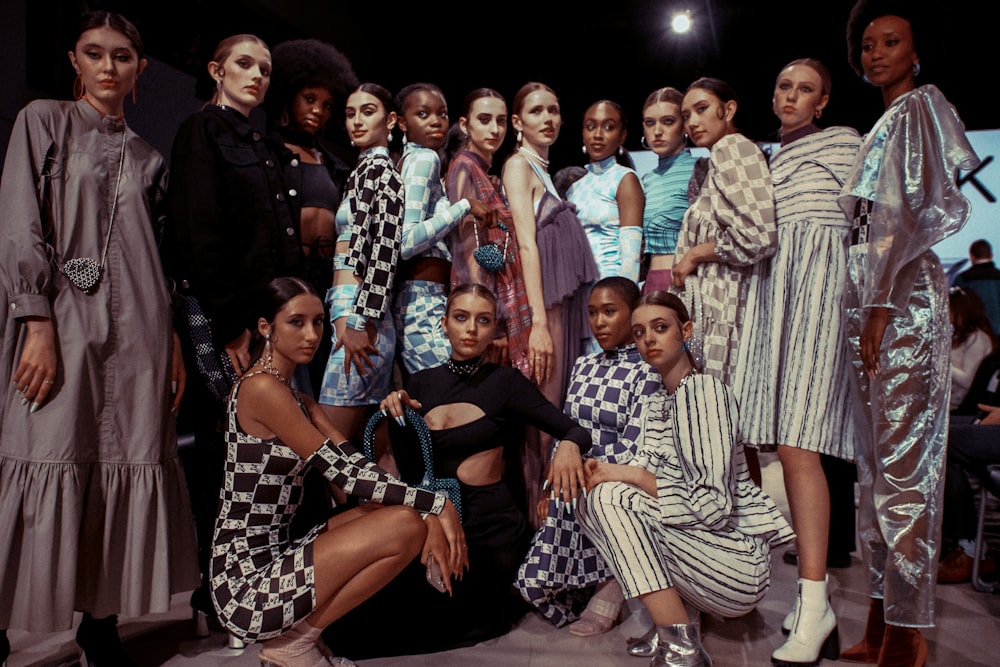
Imagine visiting a fashion e-commerce site and seeing every product displayed on a model that reflects your age, body type, and style preferences. Imagine receiving an email where the featured outfit is styled for your local weather and cultural context. Imagine social ads showing the same jacket in an environment that matches your geographic lifestyle: city streets for urban customers, coastal settings for beachside residents, mountain trails for outdoor enthusiasts.
This is personalized fashion at scale. Each customer sees a version of your brand that feels like it was created specifically for them. The product is the same; the visual presentation is tailored to maximize relevance and emotional resonance with each individual viewer.
The Technology Stack
AI fashion personalization combines three technology layers: customer segmentation identifies audience clusters based on demographics, geography, behavior, and preferences. AI generation produces visual variants for each segment using platforms like Fittins AI. Dynamic serving technology displays the appropriate variant to each viewer based on their segment membership.
Personalization Dimensions:
- Demographic -- Model age, body type, skin tone, and hair texture matching the viewer's demographic profile.
- Geographic -- Backgrounds and styling reflecting the viewer's local climate, culture, and lifestyle context.
- Behavioral -- Product presentations matching the viewer's purchase history and browsing patterns.
- Seasonal -- Imagery reflecting current weather conditions in the viewer's location.
- Contextual -- Styling appropriate for the viewer's likely use case (work, leisure, evening, sport).
Business Impact: What to Measure
Metrics to Track:
- Conversion rates -- compare product pages shown on relatable models with your standard imagery.
- Return rates -- check whether more realistic visual expectations reduce returns.
- Customer lifetime value -- watch whether personalized experiences build stronger brand affinity over time.
- Email engagement -- test contextually relevant imagery against generic imagery in the same campaign.
- Time on site -- see whether customers explore more products when visuals resonate.
Implementation: Start Small, Scale Smart
You do not need to personalize for every individual customer immediately. The most effective approach starts with segment-level personalization and progressively increases granularity as you build infrastructure and data.
Define 3-5 Customer Segments
Analyze your customer data to identify 3-5 distinct segments based on demographics, geography, and purchasing behavior. These segments become the foundation of your personalization strategy.
Generate Segment-Specific Imagery
Use Fittins AI to create product imagery tailored to each segment: different models, different settings, different styling contexts. Each generation covers one look (an AI model with 1 to 3 product photos), and several can run at the same time, so start with your top 20% of products by revenue and expand from there.
Implement Dynamic Serving
Configure your e-commerce platform to serve the appropriate image variant to each visitor based on their segment membership. Most modern e-commerce platforms support this through built-in personalization tools or third-party integrations.
Measure and Optimize
Track conversion rates, engagement, and return rates by segment. Identify which personalization dimensions have the greatest impact and invest accordingly. Expand to more segments or finer personalization granularity based on performance data.
Quick Win
Even basic demographic-matched model imagery (showing products on models that reflect the viewer's age and body type) is the simplest place to start. Test it against your standard imagery and measure the difference in conversion.
Personalization is not about being intrusive. It is about being relevant. AI gives fashion brands the ability to be relevant to every customer, at scale, without compromising on visual quality.
— Fittins AI Team
Continue reading


